


MY TRIPS TO ACQUIRE MEDICINE
Father’s health was declining, and he needed medicine for his ulcers from Reichenbach, five miles away. Usually I was sent on these errands, and Kaete stayed home to nurse him.
All Germans were required to wear a white armband to identify them as the conquered enemy. On this errand I decided not to wear it. I tied on a bright head scarf and tried to look as Polish as possible. I had already learned a few phrases of their language.
So that’s how I took off on my bike; and sure enough, from the town of Peilau on, whole columns of Russian soldiers traveled on the main road. I had to pedal along the bike path right next to them. They looked at me curiously and shouted, “Dzień dobry, proszę pani” and I called back cheekily, “Dzień dobry, panie!” (Good morning, Miss; good morning, Sir). Then they were satisfied and left me alone, but the whole way I was shaking and kept crying out to the Lord for protection. I didn’t dare show any fear.
Everyone was thankful when I returned home safely, glad that no one had taken my bicycle. Russians and Poles were always on the lookout for bikes. They were our liberators all right, freeing us of all our belongings—jewelry, watches, bicycles, radios, etc. We didn’t dare wear earrings—they’d yank them right off a woman, causing severe injury to earlobes. I took mine out and have since only worn clip-ons.
The last trip I made to Reichenbach, I walked. By then the Russians had come and taken the bike. Again I traveled without my armband and wore the Polish-looking headscarf. No mishaps occurred on the way there, and I happily made my way home. I was walking along a stretch of road surrounded by wide open fields when suddenly in the distance I heard the clip-clop of horses’ hooves and saw a carriage appear. There was no place to hide. I could hardly keep walking in my fright; I shook so much. In my heart I kept screaming, “Lord, help me!”
The carriage stopped. The door opened and a group of Russian officers gestured for me to step inside. A Pole was the driver, and he had recognized me. Inwardly I screamed, “Lord, stand by me.” Then with knocking knees, expecting the worst, I climbed in.
To my great surprise, they scooted together, creating room for me to sit, and said, “German girl, do not be afraid. We only want that you get home faster.” They spoke German well and treated me like a lady. They even offered me bonbons. How I thanked God for his protection.
Father and Kaete were astonished when I came home much earlier than they expected. We were all so thankful. The Lord knew that my cup of suffering was near to overflowing. I think I would have had a nervous breakdown had they assaulted me. Too much had already happened in my young life.
Many of my friends did not fare so well. Stalin promised his army plenty of liquor and girls, giving full permission to rape the German women. Yes, and this is what the Russian soldier found worth fighting for. They were allowed to loot, plunder, and destroy without consequences. We lived under complete anarchy.
One friend shared with me that a Russian dragged her into the bedroom and raped her while her mother stood weeping and pleading outside the locked door. Another friend told me, years after the event, how a Russian soldier had thrown her on the bed and she fainted. When she came to, he was gone, but she knew she had been violated.
Why did so many women not tell their stories until years later? Because they were too ashamed, shattered, and broken by the humiliating, coarse violence to which they had been subjected.
In Reichenbach, many women were not only raped, but some were also tortured to death. People can turn into beasts, especially under the influence of alcohol. The danger of acquiring sexually transmitted diseases was also an issue. The authorities allowed free doctor visits and exams. Whether doctors also performed abortions, I do not know.
Our worst suffering came in the war’s aftermath, which was why the terror we experienced under the Russians and Poles seemed all the more horrific. The enemy could do with us as they pleased. Imagine the vulnerability of being without citizen rights, always at their mercy. It was a nightmare.
However, Russians and Poles did not care for each other. So we could play them against each other to our advantage. What a gift it is to live under a government that provides order.
OUR HORSES ARE TAKEN AWAY
One day several girls came to visit. They were relating terrible events when suddenly our dog barked. On cue we raced to the pigeon loft, pulled up the ladder, and locked the door.
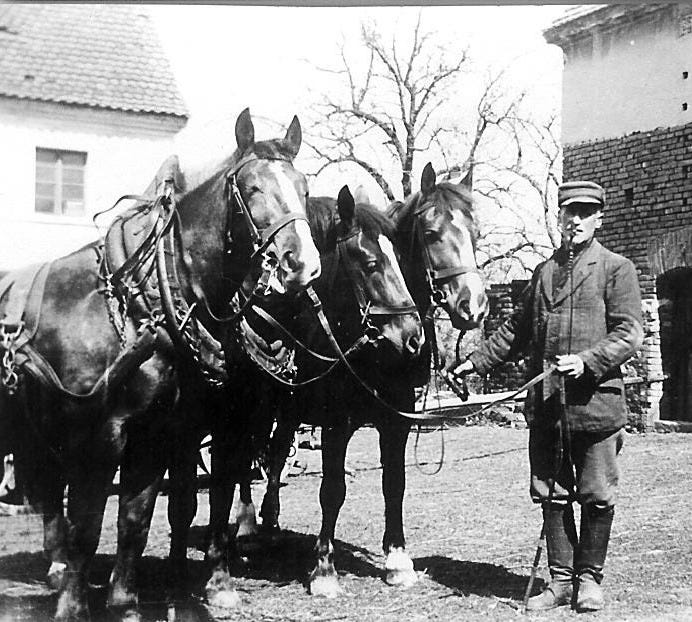
Safely hidden, we settled down on the floor. I finally risked peeking through the slats of the roof hatch. From my hiding place, I could see three armed Russians gesturing to Father to bring the horses out of the barn. Father’s face was snow white. I could see it took great effort for him to not yell at the soldiers. His horses! The horses he had lovingly raised from birth. His pride and joy. Now he was forced to give them up in such a demeaning way? My throat constricted as I watched him walk, shoulders drooping, towards the barn.
Suddenly one of the girls collapsed. She had caught sight of the Russians through the slats. Her whole body shook so hard her teeth were chattering as she tried to stifle her weeping. She had experienced terrible horrors the past few days, including an assault the night before. Desperate to calm her down, we kept reassuring her, “You don’t need to be afraid. Our hiding place is safe. They won’t find us here.” But she was having a nervous breakdown. We feared she would scream and give us away. Slowly we were able to help her regain some composure.
We did not dare go down into the house until everything appeared quiet again. Father said in a flat voice, “Now they have taken them away.” Yes, what could you say? Little by little everything was taken from us.
The Russians set Michael, one of our former workers, as commander over the village. He was twenty-four, blond, blue-eyed, spoke excellent German, and had attended university in his homeland. He was dependable, and we had been very pleased with him over the past two years. When Michael heard about the horses, he immediately found out where they were and returned them to us. Again and again Father stroked the horses’ heads as they whinnied and snorted.
AN UNFORGETTABLE NIGHT OF TERROR
The Russians continued to terrorize us. At night, women were forced to hide themselves in barns and attics to escape prowling soldiers. Kaete and I stayed at home because we didn’t want to leave our sick father alone. We relied on the pigeon loft for emergencies. During the day, every woman kept vigilant eyes on her surroundings, alert to the nearest hiding place at all times.
About two weeks had passed since the Russians invaded. Father, Kaete, and I slept in the same room because a refugee family, the Grabolles, was staying with us. One night after we’d all gone to bed, we suddenly heard pounding on the front door and shouts: “You have to open up. We are looking for German soldiers.” Two drunk Russian soldiers stood outside. I quickly climbed to the pigeon loft and pulled up the ladder.
Herr Grabolle went downstairs and let them in. He had no choice. If he had not, they would have forced open the door.
The soldiers strode around pretending to inspect everything, their usual mode of operating when looking for women. Their excuse: “We are seeking German soldiers.” I could hear much that was going on from my hiding place and trembled in fear, but my heart nearly stopped when I heard them ask, “Where is the person who sleeps here?” They had found my still-warm, empty bed in Father’s room. They shouted, “You are hiding a German soldier. Where is he?” In my heart I screamed to God for help. I was so afraid someone would be forced to betray me.
Later I learned that the men went out into the hall. It appeared that the inspection was over and they were leaving. Kaete quickly locked herself in with Father in our bedroom. He was very sick now, and she did not want to leave him alone.
But the men had only gone into the hall to strategize. Suddenly they returned and attacked. One soldier grabbed Frau Grabolle, dragged her into the bedroom, and bolted the door. Her husband stood outside, pounding on the door, weeping, “Please leave my wife alone; my wife, she is my wife!”
The commotion was terrifying. I shook from head to toe and prayed in silent screams to the Lord. My heart beat so loud and fast I feared I’d soon have a heart attack and make all kinds of noise—then they’d surely come looking for me. After all, they knew a missing person belonged to the empty bed.
Oh, I was so afraid the Russians would force the others to betray my secret hiding place. If they shot someone in their efforts to gain a confession, I feared I’d scream and be found. And if someone was killed because of me . . . I didn’t think I could forgive myself.
The other soldier kept knocking on Father’s bedroom door. When Kaete didn’t open, he began beating in the door with his boot until it splintered. Later they told me that with his pistol drawn, he crawled through the hole he’d punched in the door. Then he seized Kaete. Father tried to help her, but the soldier kicked him in the stomach, and he fell backwards on the bed. To keep him down, the Russian slammed Father’s nail-spiked work shoe over his head.
The following I did not learn until forty years later when Kaete and I were reunited for the first time. I had always believed the soldier had only roughed her up and that she’d been able to fight him off. But she revealed that the Russian, pistol in hand, threw her on the bed and raped her, though she resisted. I can’t imagine how witnessing this atrocity must have affected Father.
Once the Russians left, we all assembled in Father’s bedroom. Frau Grabolle’s night jacket hung in shreds over her body. Her twelve-year-old son, Franzel, stood there trembling and covered in cow dung. Upon hearing the soldiers enter, he had leaped from the second-story window in his fright, landing in some cow pies. An angel must have caught him because he was not injured.
Herr Grabolle was white in the face and shook with helpless rage. Kaete and Father looked disheveled and devastated. You could see the nail marks in Father’s head from the shoe beating.
We looked like a bunch of spooked chickens and were struck by the absurdity of it all. Suddenly, we broke out in hysterical laughter. It felt better to laugh than to cry in that moment. But our nerves were completely frayed. To this day, the horror of that night still terrorizes my dreams from time to time.
Father said, “That was the last straw and the most terrible of all.”
FATHER’S PASSING
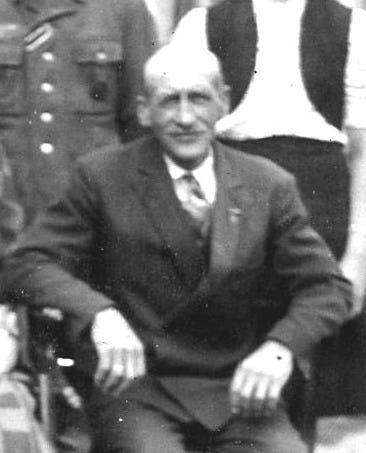
Throughout the night Father’s condition worsened. He had been suffering from ulcers, but the soldier’s kick to his stomach severely injured him. The next day we wanted to take him to the hospital but needed permission from the Polish police because of the Russian threat. A Pole was sent with a carriage to drive us, and all along the way, just for entertainment, he shot his gun randomly into the air. My nerves could hardly take it.
The doctors examined Father and said, “It’s too late; we cannot operate.” Apparently something had ruptured in his stomach from the kick.
While Father languished in the hospital, the Russians came and took the horses away again. Unfortunately, Michael had been transferred, and that left us without protection. Since he had not come to say goodbye, we suspected that, in actuality, the Russians had killed him. According to rumor, the Russians shot everyone who had once worked for the Germans. Good-hearted Michael; he was like family to us. We never heard from him again.
When I visited Father, he immediately asked, “How are the horses?”
I didn’t have the heart to tell him they’d been taken again. To avoid upsetting him, I simply said, “Please don’t worry. Everything is in order.”
I knew how concerned he was about us. How could life go on like this? Yet Father seemed at peace during my last visit with him. He still held out hope for recovery.
Years later (1980), Onkel Alfred told my daughter, Ruth, about his brother’s last days. I had not heard this account before. Apparently when the doctors told Father they couldn’t operate and nothing more could be done for him, he leaped from his death bed and went raging and shouting through the hospital. I can only imagine his panic and helplessness, knowing he was leaving his daughters behind in such circumstances, no longer able to protect them.
On May 29th, we received the phone call. Father had died peacefully. Only six weeks earlier we had laid Mother to rest. May 15th would have been their 25th wedding anniversary.
At Mother’s funeral we heard cannon fire from the advancing front, and now the Russians were here. The hired help lifted Father’s coffin onto the box cart, which they had decorated with evergreen boughs, and the Russian ponies, not his own horses, pulled the wagon in a sad procession to the cemetery. I felt numb and wondered what else would be taken from me. I had now lost both parents, and I was only sixteen.
Our pastor stood at the grave and spoke about this scripture: “Even if my father and mother abandoned me, the Lord would take me in” (Psalm 27:10). The pastor said that the Lord would never leave or forsake us. His words deeply impacted me.
In the coming years I would often recall this verse and his hopeful message.
Under His Wings” are excerpts from Hannchen Gantenbein’s autobiography as told to Ruth Wood, her daughter. The account highlights God’s protection and guidance as she grew up in Nazi Germany, lived through World War II, and immigrated to the United States. Watch for monthly posts on the 20th!
Under His Wings/Table of Contents