


Photo by Sirena Velena on Unsplash / A generic photo/NOT from the Gantenbein family archives
THE YEAR 1945
It was the winter of 1945. Our troops were retreating, forcing many Germans to flee. The refugees came through Habendorf on wagons or on foot, transporting children in baby carriages. Hordes of cows and sheep clogged the roads as they were driven deeper into Germany to escape the rapidly approaching Russian front. What mooing and baa-ing and absolute chaos.
Once, some refugees and soldiers drove about fifty cows into our courtyard. Some of the cows’ udders were raw and infected. We milked like crazy, poured the milk into barrels, warmed it in pans, and served it to the soldiers and refugees passing through. This was forbidden, but no one cared anymore.
Then several soldiers butchered a cow on the spot. (Also forbidden.) They cut up the meat in the barn, and we women cooked it in the kitchen. What a delicious feast for so many hungry folks.
In every nook and cranny we housed refugees and soldiers. Only one bedroom in the house remained available for our family, where all four of us slept. People even dragged straw into the kitchen and slept there. We ran here and there, caring for everyone, and throughout all this craziness we also cared for Mother. She sat with large, sad eyes in her chair, wishing she could help.
The sounds of war drew closer and closer. At night our windows often rattled from the din of bombs crashing. We heard the rat-tat-tat-tat of machine gunfire in the distance. The battlefront was only sixty kilometers away in Breslau now.
MOTHER’S PASSING
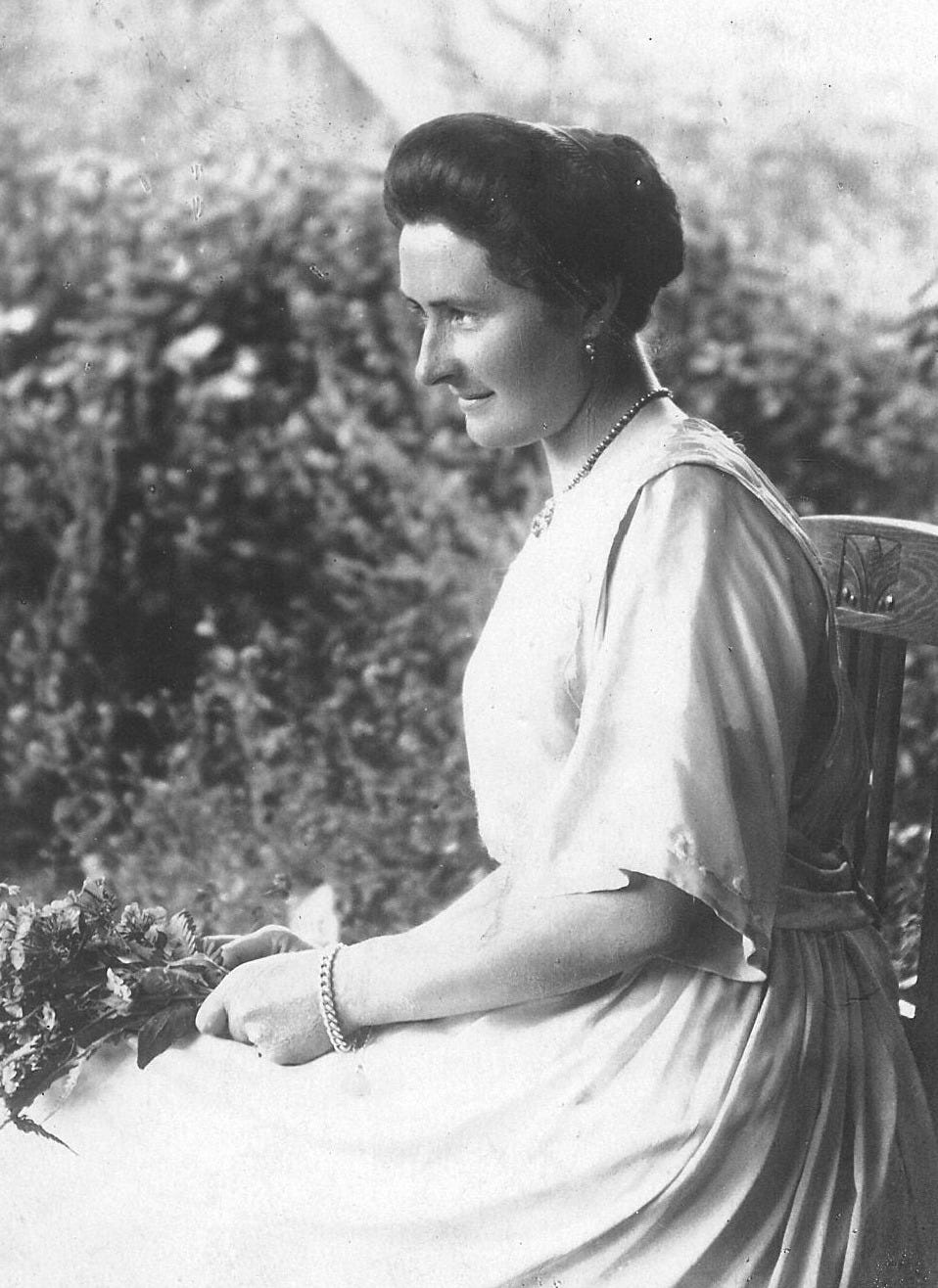
With the Russians closing in, concern for our beloved mama grew. Every day she was growing weaker. How would we care for her when the Russians came? Dismayed at our situation, the retreating German soldiers constantly told us to flee or hide, but how could we do this when caring for an invalid?
One day Tante Ida said, “Let’s pray that the Lord will take your Mama home.” I saw how much she suffered and was finally ready to let go. The Lord had given us two more years since the stroke, and now, at age sixteen, I felt more mature.
The next day the village nurse came and celebrated communion with Mother, Father, and Kaete. I had to go out to the fields to oversee the foreigners planting potatoes. I wanted so much to join the family at this last communion, but Father said, “If we don’t plant anything, then we will not have a harvest and will go hungry.” He was absolutely right in this decision, as we saw later.
As she neared the last days of her life, Mother’s eyes remained closed. She no longer spoke to any of us but kept saying, “Lord Jesus, help me. Please, help me.”
I often sat by Mother’s bed to help her drink and to moisten her parched lips. Two days before her passing, Mother lost consciousness. On the morning of April 11th, I stood by her bed once more before going out to the fields. Oh, how I would have rather stayed.
Around two o’clock Kaete appeared on the hill and waved for me to come home. She said, “Mama left us quietly. Her passing was like a clock that wound down and finally stopped ticking.” Interestingly, she died in the same room where she had been born.
A great sense of abandonment overcame me. Without my Mama, my best and dearest friend, I would be so alone in the world. But I was glad to know her safe in the Lord’s hands and comforted myself with the thought that one day I would see her again.
Tante Ida said, “Come look. She is so beautiful and peaceful.” But I just couldn’t. I preferred to remember her alive. I didn’t know how to face it—I was still young and felt so overwhelmed by everything.
On the day of the funeral, the pallbearers carried her coffin as we followed for the thirty-minute walk to the cemetery.
Kaete, Father, and I stood at the open grave as the pastor gave the eulogy. Men in our culture did not cry, and Father stood like a stone. He kept shaking his head over and over, as if to say, “I can’t believe that my dear ‘Tielchen’ is no longer living.”
I thought about how much he loved Mother despite his rough exterior. Whenever he entered the house, his first words were, “Where is Mama?” When she’d appear, he’d call out, “Now where have you been keeping yourself?!” She was the only one who could calm him down when he got in one of his moods, when nothing could please him because he didn’t have a cigar. After Mother’s stroke, Kaete and I often marveled at his loving manner and new-found patience as he helped take care of her.
The pastor said a final prayer, and the coffin was lowered into the ground. In the distance, cannons thundered and the earth shook.
About 40 miles away in Breslau, the war raged. In the coming weeks, as the Russian occupation took over our lives, I was so grateful that Mother did not have to live through the horror of those days, but I carried an empty ache in my heart. Sometimes in my mind I’d hear her call and want to go to her bed to help—but she wasn’t there anymore. We all missed her.
During this time I learned an important lesson—serving others is good therapy for grief. With all the chaos that came when the war ended, I had little time to think about my own troubles because I was busy helping others.
Father had often said, “When Mama dies, I will not want to live anymore.” And so it came to pass. However, in the six weeks before he was buried next to his ‘Tielchen,’ he had yet to endure terrible events.
THE SIX WEEKS BEFORE FATHER’S PASSING
There was no time to mourn because streams of refugees and soldiers passed through our village and needed housing and food. In the chaos of the advancing eastern front, our courtyard resembled military barracks teeming with horses, soldiers, refugees, and cows.
Along the roadsides, you’d find dead cows that needed to be buried. Refugees sometimes arrived with deceased loved ones that also required proper burial. My father was responsible for digging the graves. When the refugees first began coming through in the winter of 1945, it was a difficult job to shovel the frozen earth, but now it was May, and the ground was no longer so hard.
In the meantime, the gunfire drew nearer. Fleeing the Russians, streams of German soldiers and refugees headed west or escaped to Czechoslovakia.
We received word to leave and loaded a wagon with provisions for us and for the horses. What should we take? What was important? We packed food, a few blankets to keep warm, enough oats for the horses, and a few souvenirs. Oh, it was so hard. If we left, we would have to release the cows and all livestock, giving them over to fate.
Kaete decided to bury our valuable jewelry. We collected Grandmother’s gold necklace, Mother’s gold teardrop earrings, a silver braided chain bracelet, a silver necklace with amethysts, and Kaete’s ruby ring and put them in a metal box. Kaete secretly buried it under a hazelnut bush in our orchard.
Later, when the Poles discovered that some people were burying their treasures in graveyards, they ransacked the cemeteries, digging up graves in their search for valuables and looting marble from the headstones. Not until many years after the war did my sister finally feel safe enough to dig up the box and retrieve the jewelry.
But for us, the main question at the time was, “Do we flee or do we stay?”
“Under His Wings” are excerpts from Hannchen Gantenbein’s autobiography as told to Ruth Wood, her daughter. The account highlights God’s protection and guidance as she grew up in Nazi Germany, lived through World War II, and immigrated to the United States. Watch for monthly posts on the 20th!
Under His Wings/Table of Contents
I continue to be amazed at the grace your mom had and faith. Thanks again for sharing such intimate details of her life. 🤩
Very moving, Ruth! And your mother was a very beautiful person.