


HOW WE LOST KURT
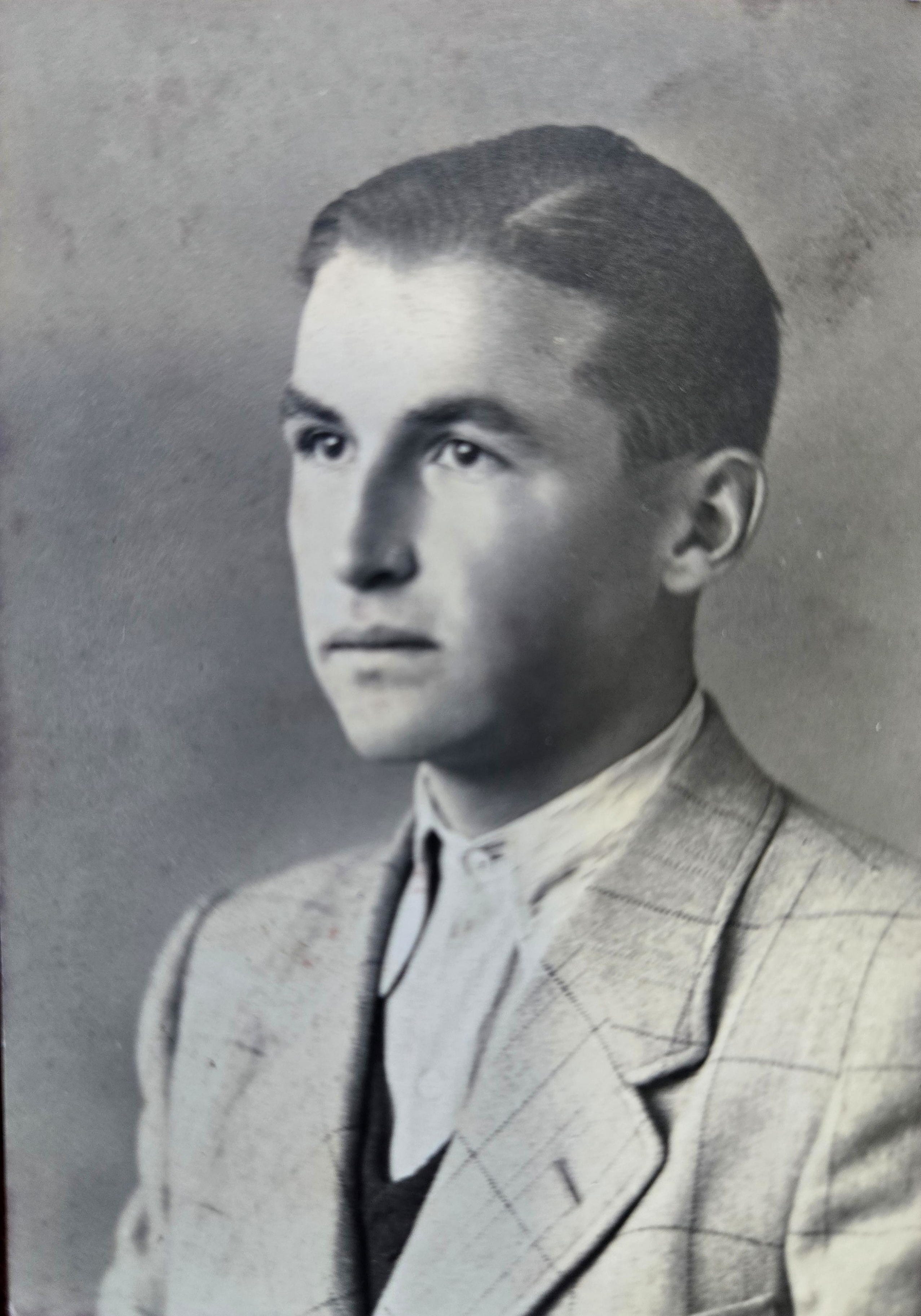
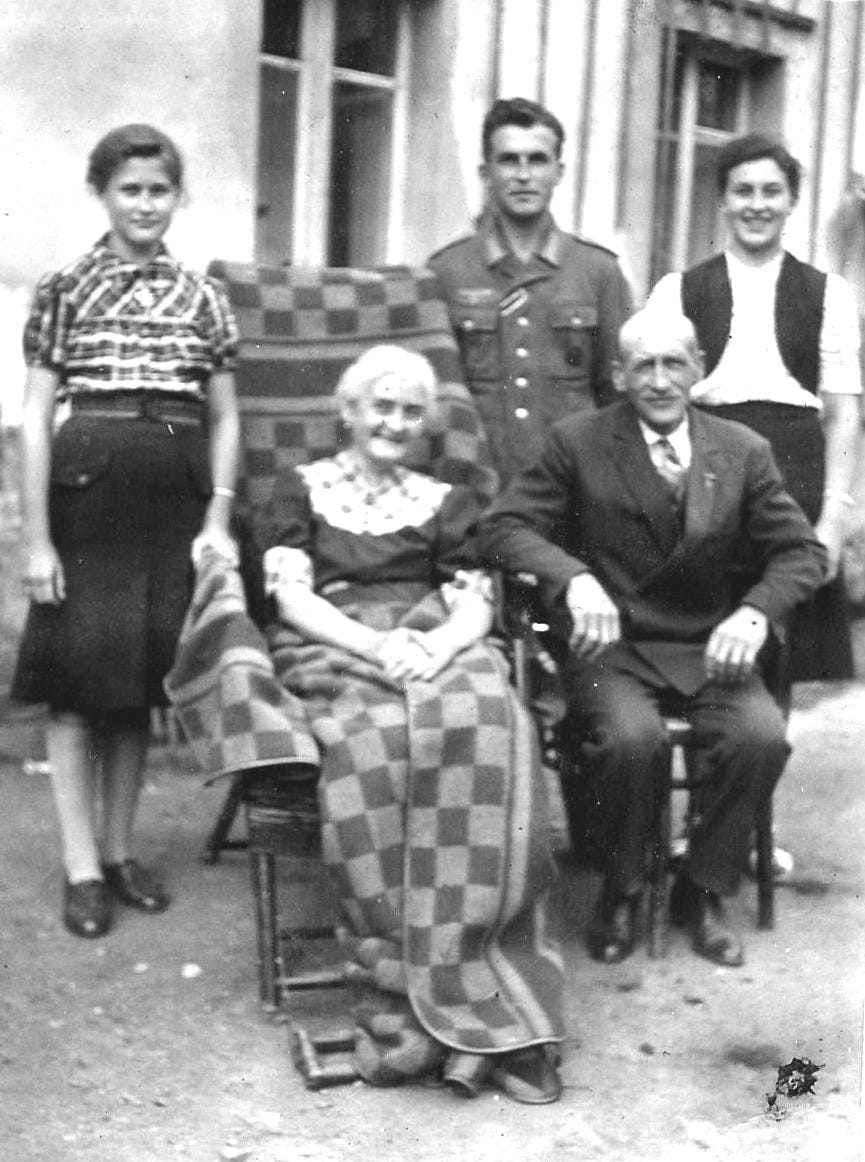
In the fall Kurt came home on leave once again for three weeks. By then Mother could already sit up and even walk a little with a cane. She had regained her speech, and you could converse with her. The two enjoyed long conversations together. We continued to pray for them both.
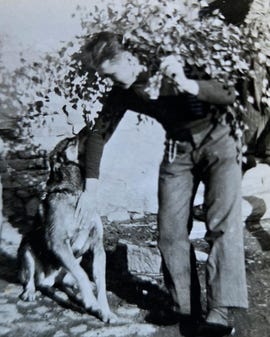
Then it was time for him to go back to the front. This parting seemed particularly hard for Kurt. He walked around the house and the courtyard and petted a horse and also the dog—it was as if he were saying goodbye to everything.
Then he shook hands with each of us, and oh, how we bravely swallowed our tears, hoping to make the farewell easier for one another.
Father hitched up the horses to drive Kurt to the train station. As they passed by on the village street, Kurt leaned far out of the carriage, waved, and smiled, his final, oh so beautiful, smile. I knew in my heart this was the last time I’d see him. This is how I’ve kept him in my memory and how I will see him again in heaven.
After he and Father drove away, we all cried openly. It felt as if the sun had gone down forever.
After that second leave, Kurt was sent to Ukraine, where he was stationed by the Black Sea. He wrote us long letters, reporting that the soil was excellent for farming, that melons and tropical fruit grew in abundance, and that the girls were beautiful. He also noted that the climate was so hot, they fried eggs on their tanks.
He also wrote about a fierce battle where grenades exploded all around him and many died. This was known as the “Stalin Organ.” He relayed final greetings to the family of a dying comrade, Lord von Finkenstein.
We sent him many packages. He especially appreciated the delicious butter cookies from home. All our dear soldiers were homesick and would have preferred being with their loved ones over serving in war.
As the year 1943 came to a close, we waited for news from Kurt. One night I dreamed I saw him in his uniform sitting at the table, and every time I wanted to go to him, he disappeared. I awoke feeling sorrowful.
Then a letter came, not in his handwriting, but he had dictated it. He was in the army’s field hospital because his right collarbone had been injured by a grenade splinter. He told us not to worry—he would come home soon. For a few weeks we heard nothing more.
Then the morning of January 12, 1944, the village mayor came and spoke with Father in the courtyard. I stood in the door of the entryway and saw Father turn white in the face. Repeatedly he shook his head in disbelief. The mayor stared at the ground—his son and Kurt were good friends.
I immediately knew what this meant, and the blood froze in my veins. Inwardly I screamed, “No, that can’t be—my beloved brother—dead? There must be some mistake.” All life seemed to drain from me, and I began to shake.
Even though we knew Kurt was in harm’s way, we were still unprepared, especially because the last letter assured us that his injury was not serious.
My concern now turned to Mother. It was morning, and she was still in bed because we had not yet dressed her. Father walked past me and said in a flat voice, “Yes, Kurt died from his injury. I will tell Mother.”
Mother said later he’d thrown himself on her bed with loud sobs, and she knew right away—it was Kurt. And they cried together. Then Mother said, “The Lord giveth and the Lord taketh away; blessed be the name of the Lord.” Though she was paralyzed and helpless, she comforted the rest of us.
We were thankful that he died in the Lord and that we knew exactly how and when he died and where he was buried. Many never learned what happened to their loved ones. They simply received the news “missing in action” or “dead.”
Kaete and I cried in the kitchen, and all the hired help cried with us. They loved Kurt too—he had been so good to them, and they liked working with him. We had all looked forward to his homecoming.
As long as I live, I will never forget this terrible day.
They sent us his things. In his wallet he had preserved the grenade splinter—he’d wanted to show us how he’d been injured. Kurt always saved everything. The army chaplain wrote to us saying that the splinter not only shattered the collarbone but also went into the lung, and they operated too late. The chaplain had administered communion to Kurt before he died peacefully on December 29, 1943. We were thankful to know all this.
Later we learned that a relative of ours, a high-ranking officer who served in Odessa also, visited Kurt’s grave and buried a bottle with important information there. The army planned to level the cemetery because Germany was retreating from Russia.
We held a memorial service in our church. Mother attended, leaning on her cane, and I marveled at her strength. When the church bells rang, the congregation sang:
My anxious heart be still . . . this world is not our home.
OTHERS WE LOST
Besides Kurt, many more in our circle of relatives and friends lost their lives:
Herbert Koschwitz, 21, a neighbor and Kaete’s former suitor, died in action.
Cousin Heinz Naefe, 18, after only a few days in Russia, died of a gunshot wound to the head.
Cousin Rudolf Deport, 26, missing in action. We never heard from him again. He was the father of one child.
The husband of cousin Lotte, father of three children. Died in action.
Some were maimed for life. My cousin, Heinz, was twenty-three and married. He was critically wounded during an explosion near the end of the war. He lost his eyesight and his right hand. On his left hand, only the thumb and little finger remained. His wife immediately divorced him. However, he courageously managed his disability, found work as a telephone operator, and later married his caregiver.
The war claimed victims in every house. Friedrich Simmel, my godfather, was the Jewish husband of my mother’s youngest sister. He was taken by the Gestapo two months before the end of the war. We never heard from him again.
By the end of the war, Habendorf, with only a population of 1,000, had lost sixty people. Later when the Russians came, the count rose higher because in the chaos of the end, not all deaths were reported.
We attended one funeral after another in those days. Almost everyone dressed in black because most people were mourning someone.
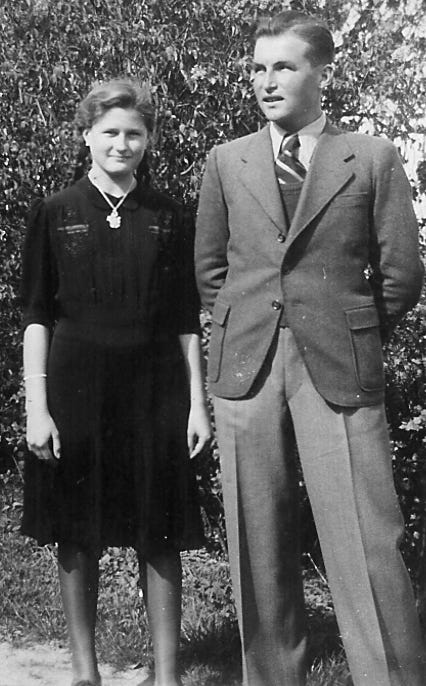
“Under His Wings” are excerpts from Hannchen Gantenbein’s autobiography as told to Ruth Wood, her daughter. The account highlights God’s protection and guidance as she grew up in Nazi Germany, lived through World War II, and immigrated to the United States. Watch for monthly posts on the 20th!
Under His Wings/Table of Contents
Ruth, this writing is such personal and historic accounts. I think I've said this to you before, but what a privilege to have this. Your mom and family had such incredible faith. It's beautiful amidst such tragedy--so much loss. Heartbreaking. The photos are really very good for the time. I'm glad you have those all within "Under His Wings."
Their strength and profound faith must soldify your own strength and faith. Beautiful!
Oh Ruth~ Such a tender story! My heart hurts for your mama and her family. I lost my dear eldest brother in Vietnam. He knew the Lord as well. War is horrible but even in the darkness God shines his Light of Hope and Grace!